
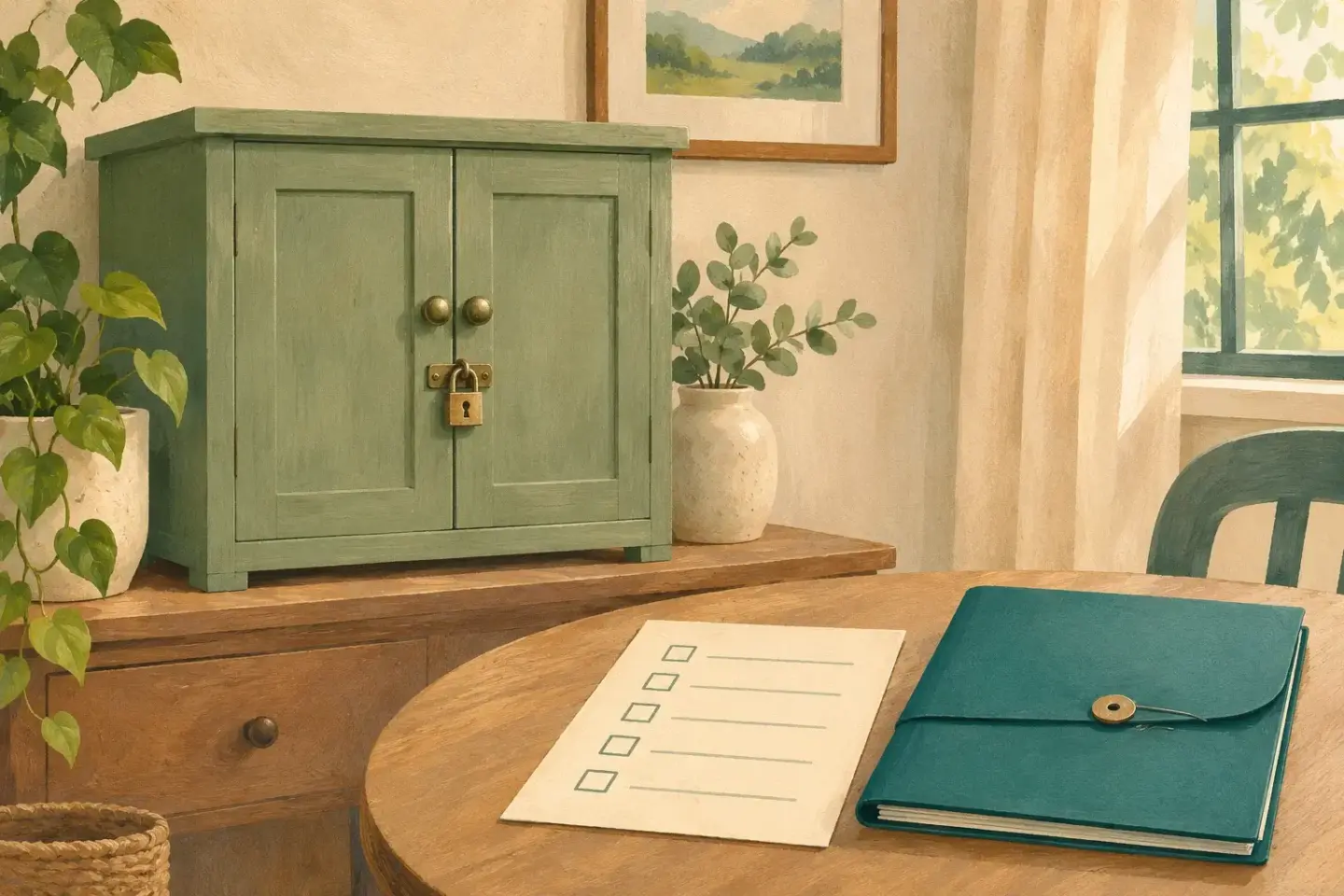
A storage check is not an invitation to rearrange every medicine in the house. Start with one person’s information and the containers that belong to them. The useful outcome is a clearer picture of what needs a label check, a pharmacist’s answer or a disposal plan.
Choose a time when you can work without leaving medicines unattended. Keep the person whose medicines they are involved. Do not combine several people’s containers into one collection simply because it looks tidier. A familiar arrangement may need a small adjustment, not a complete replacement.
Read the instructions before choosing a place
Storage requirements belong to the individual product. MedlinePlus explains that heat, light and moisture can damage medicines, advises keeping them in original containers, and recommends asking the pharmacist about specific storage instructions. A bathroom can be a poor location because of heat and damp.
Check the actual label and leaflet. If the instructions are unclear or you suspect the medicine has been stored incorrectly, ask the pharmacist what to do with that product. Do not decide it is usable because the package looks normal. Do not choose refrigeration, a countertop or another location as a universal rule.
Make an inventory of questions
Use a separate sheet rather than marking over the pharmacy label. You are recording a practical issue, not changing an instruction. A question entry can include the product name, the concern, the person you plan to ask and the date you will follow up.
- The label is difficult to read or part of it is missing.
- The storage direction is unfamiliar or unclear.
- A container does not match the current written list.
- An expiry date needs checking or cannot be found.
- You need advice about an unused product or a damaged package.
Keep medicines secure while questions are being resolved. Do not create an open “sort later” basket that children, visitors or pets can reach. MedlinePlus recommends keeping medicines out of children’s sight and reach, using a child latch or lock. Easy access for the intended adult and safe storage both need attention.
Give paperwork a nearby home
Keep product information in a folder you can find, without using it as a substitute for the label on the container. Put the current medication list at the front, with its checked date visible. File spare leaflets together so that they do not become loose papers mistaken for new instructions.
An organizer, tray or drawer divider should serve the arrangement, not dictate it. Before moving medicines out of their original packaging into a pill organizer, ask the pharmacist whether that is suitable for those medicines. A picture of a tidy box cannot answer a product-specific storage question.
Plan disposal as a separate job
The FDA recommends take-back or mail-back options for most unused or expired medicines. If those options are unavailable, its guidance distinguishes medicines on the flush list from other medicines and explains different disposal routes. Do not use a blanket rule to flush everything or put every product in household trash.
Ask a local collection service what it accepts before making a trip. Record the location, opening arrangements and any packaging instructions. Needles, inhalers and other special products may need different handling. Follow the product’s instructions and the receiving service’s guidance rather than emptying everything into one bag.
A short storage-check record
- Person and date of check
- ____________________
- Container or document checked
- ____________________
- Question noticed
- ____________________
- Professional or collection service to contact
- ____________________
- Answer and source
- ____________________
- Action completed / still pending
- ____________________
For example, “asked about disposal” is a pending task until you know the accepted route. “Collection confirmed for Friday; containers remain securely stored” tells the next helper what has actually been arranged. The example concerns logistics, not whether a medicine should be stopped.
Finish without creating extra work
Put confirmed current paperwork back in its place. Leave unresolved questions on the follow-up sheet and assign each one to a person. Do not discard a medicine simply because a personal list looks incomplete; ask the pharmacist or prescriber to resolve the mismatch.
The check is finished when the space is secure, the documents are findable and the next questions are clear. It does not need to end with matching containers or a newly purchased cabinet.